
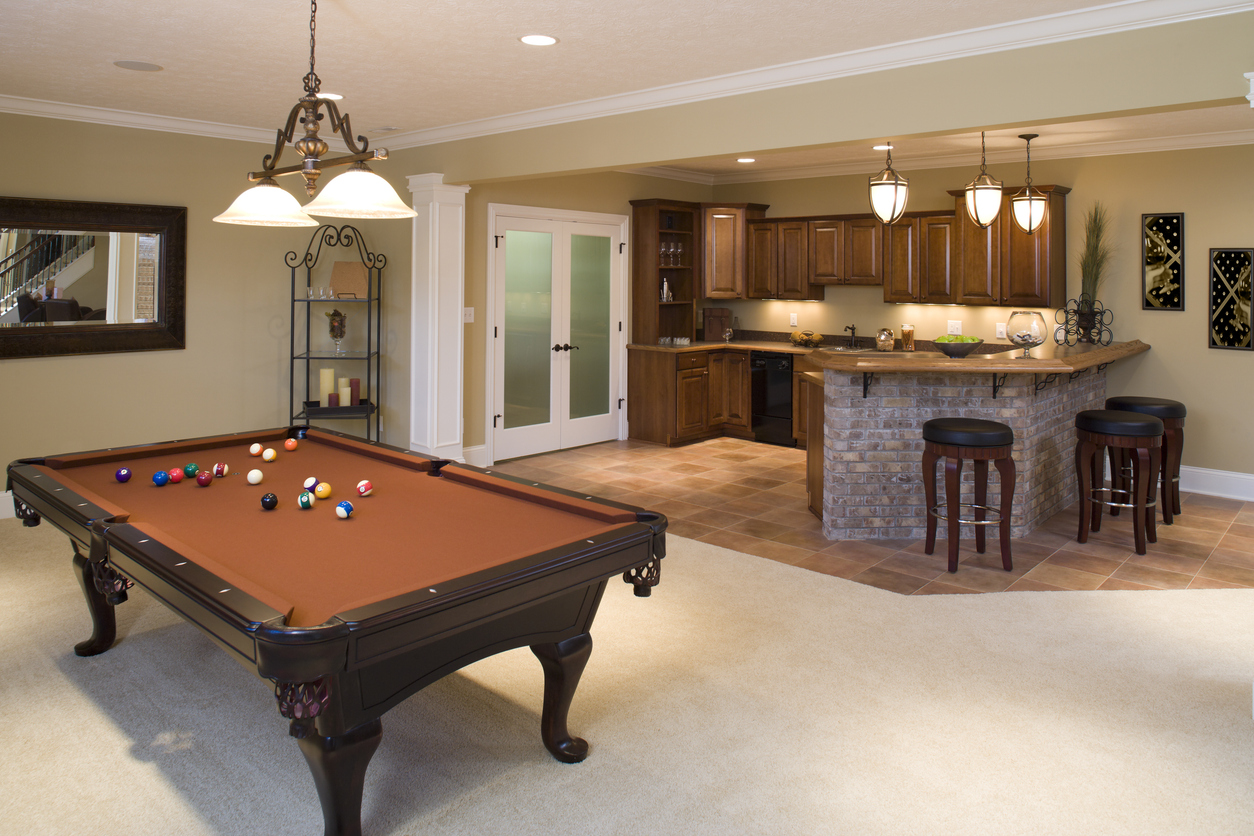
What exactly is basement finishing vs home addition? If your home is starting to feel small, you might consider a major remodel. For many homeowners, there are two options to increase usable living space and potentially avoid moving: Finishing a basement or building an addition.
In some cases, it may be a no-brainer. If the basement is already finished and your home still feels small, you may need to consider an addition. If your lot size is very small, you may not have space for one. Many homes in DC and the inner suburbs are also older and may present specific challenges. High housing costs make it harder to move and also introduce ROI considerations; in some places, thinking about which will add more value to your home might be a lesser consideration. Sales prices have steadily increased since 2020.
Another thing to consider is, of course, your budget and your long-term goals. An addition might make more sense for a growing family, a finished basement might be better if what you need is space to entertain.
Basement Finishing vs Home Addition: Why DMV Homeowners Compare These Two Remodeling Projects
Many homes in the DC area have basements or half-basements. The former often allows increasing usable space even on small lots. Further out in the suburbs, while many homes were replaced with so-called “McMansions,” there remains a solid inventory of single-family homes on larger lots. For small lots where there is no basement or the basement is already finished, an addition over an attached garage remains a possibility.
For a lot of DMV homeowners, the question of basement finishing vs home addition has to do with property configuration, but there is one basic fact homeowners have to take into account: Appraisers generally value above-ground living space more highly. But in a city, additions are not always an option, and finishing a basement is typically considerably cheaper.
In other words, for many homeowners, it’s a question of budget versus ROI.
How Basement Finishing Impacts Home Value
So, one big issue between basement finishing vs home addition is that basements are that even a finished basement may not count as square footage for appraisals, especially if it’s completely below ground. The exact rules vary by state, but to be counted, basements typically have to have some means of egress (and bedrooms in basements must have a means of egress, such as a window to a well.
This often means that even finished basements, unless they are walk-out or otherwise partially above ground, can’t be included in the square footage provided in real estate listings and aren’t taken into account during appraisal. This is the biggest reason why finished basements have a much lower impact on home value than above-ground additions. That said, finished basements, especially if they include desirable features, can attract buyers and can add 10 to 30% to the appraised value of a home.
Lower Cost per Square Foot Compared to Additions for Basement Finishing vs Home Addition
Finished basements are typically significantly cheaper per square foot than additions. While a luxury finished basement can cost well into five figures, some basements can be finished for less than 10k total, although things are often more expensive in the DMV. Additions typically start at that cost, and adding an entire floor to your home runs into six figures easily. Above-garage additions are typically the cheapest, but still commonly cost a little more than basements.
The cost of finishing your basement increases if you are adding a kitchen, wet bar (and you may need a special permit), or bathroom, with the requisite plumbing. If your basement is already set up with plumbing, it can be lower. A good remodeler can help you determine the best use of the space.
Popular Basement Features Buyers Want
Adding popular features can significantly increase the ROI of a finished basement. These include:
- Good insulation. It might not be obvious, but proper insulation and waterproofing prevent water damage, keep temperatures more even, and lower energy costs.
- A bathroom, or at least a powder room. If you’re using your basement for entertaining, a toilet is vital. If you are putting in space that can be used as a bedroom, you want to go with a full bathroom.
- Flexible interior spaces. Envision multiple ways the space can be used. That bedroom might also work as a kids’ playroom or home office.
- Good lighting so the basement doesn’t feel like a cave.
- A wet bar or even a small kitchen. If you are planning on potentially renting out your basement, go with a kitchen. For entertaining, go with a wet bar, microwave, and fridge. Either feature is desirable to buyers.
The key thing to consider when thinking about ROI is other ways the basement space can be used. For you, it might be a game room. For the next owner, it might be a nursery or a hobby space.
When a Home Addition Makes More Sense
One obvious situation where a home addition makes more sense is if the basement is already finished or, alternatively, if the home has no basement. Many older buildings already have finished basements, including English basements. However, these buildings are often on smaller lots.
A home addition also makes more sense if you have a large lot, if the planned addition is indoor/outdoor space, such as a sun room, or if you want to build a separate ADU to provide a private space for guests, an elderly relative, or an adult child. It may make more sense if your basement is entirely below ground and can’t be legally converted to sleeping space. If the only means of egress from a basement is through the house, it should not be used for sleeping.
Expanding Above-Ground Living Space
The key here is to expand above-ground living space, which has a higher value when the home is appraised. It may also be preferable for your family. If extra bedrooms are your primary need, then above-ground is typically better.
It is also more visible, and a well-done addition can add to your home’s curb appeal, especially an over-the-garage addition. Bump-out additions in the rear, however, will not have this effect.
How Additions Affect Resale Appeal for Basement Finishing Vs Home Addition
Above-ground additions instantly increase the square footage of your home as listed, and adding one or two bedrooms often increases the value of a home. Sunrooms are popular in warm climates like the DMV.
Make sure your addition makes sense. Converting your patio into a family room, for example, may not appeal to future buyers. Turning part of it into a conservatory or sunroom, however, might work better. Converting a garage is likely to lower the value; you may not be using the garage, but most future owners will.
Adding bedrooms or bathrooms increases value significantly. A three-bedroom home will reliably fetch more than a two-bedroom home in the same neighborhood. If your home only has one bathroom, that’s a bottleneck for living. Other things to consider are adding storage space, but a bonus room or common area typically adds less value. However, if that is what your family needs, go with it!
Comparing Costs, ROI, and Project Timelines in Maryland, DC, and Northern Virginia
What are some more issues with basement finishing vs home addition? High prices in the area tend to elevate costs. For a basement, whether you need to just finish it or remodel (with more significant changes) also impacts cost, along with the square footage. In this area, basement finishing can cost anywhere from $50 to $300 square foot. Historic homes likely cost more because of infrastructure issues and the need for additional permits. Home addition costs are higher, anywhere from $130 to $500 square foot or even more.
However, the high housing prices also increase the ROI. Even the 10% you’re likely to get from a basement refinish is enough to bump up a home from six figures to seven in some places.
What else should be discussed between basement finishing vs home addition? Project timelines also vary. Finishing a basement can take anywhere from three to sixteen weeks, depending on how much infrastructure you’re putting in. Kitchenettes, wet bars, and bathrooms all take longer. Small additions take even longer, as long as four months, and a significant rebuild might take over a year and make your home hard to live in in the meantime. You may get a better deal and time to start if you get things done in the winter, which may be feasible but likely results in weather delays. Avoid summer. Not only is that when most people want renovations, but if the work impacts your AC system. The sweet spot is typically September to November. But be ready to wait for the right contractor.
Which Option Is Best for Your Home and Long-Term Goals
You should have worked out by now that basement finishing vs home addition is not a no-brainer, but think about the following.
Choose finishing the basement if:
- You want to increase usable space for a lower budget.
- Your lot is small, and there are few options for an addition.
- You have an English or walk-out basement that can legally be converted to sleeping space.
- You primarily want a large open space for gaming, entertaining, a home theater, etc.
- You have an old home that would be hard to add on to without impacting its character.
Choose an addition if:
- You want the highest increase in home value.
- You primarily want to add bedrooms.
- You have a large lot you want to make more use of
- You have no basement, or your basement is already finished.

Talk to a DMV Remodeling Contractor About Your Options
Still not sure between basement finishing vs home addition? At J&E Modern Construction, we can give you honest advice on the best way to add space to your home and avoid moving. Contact us to discuss your home and lifestyle today or to get a free quote.